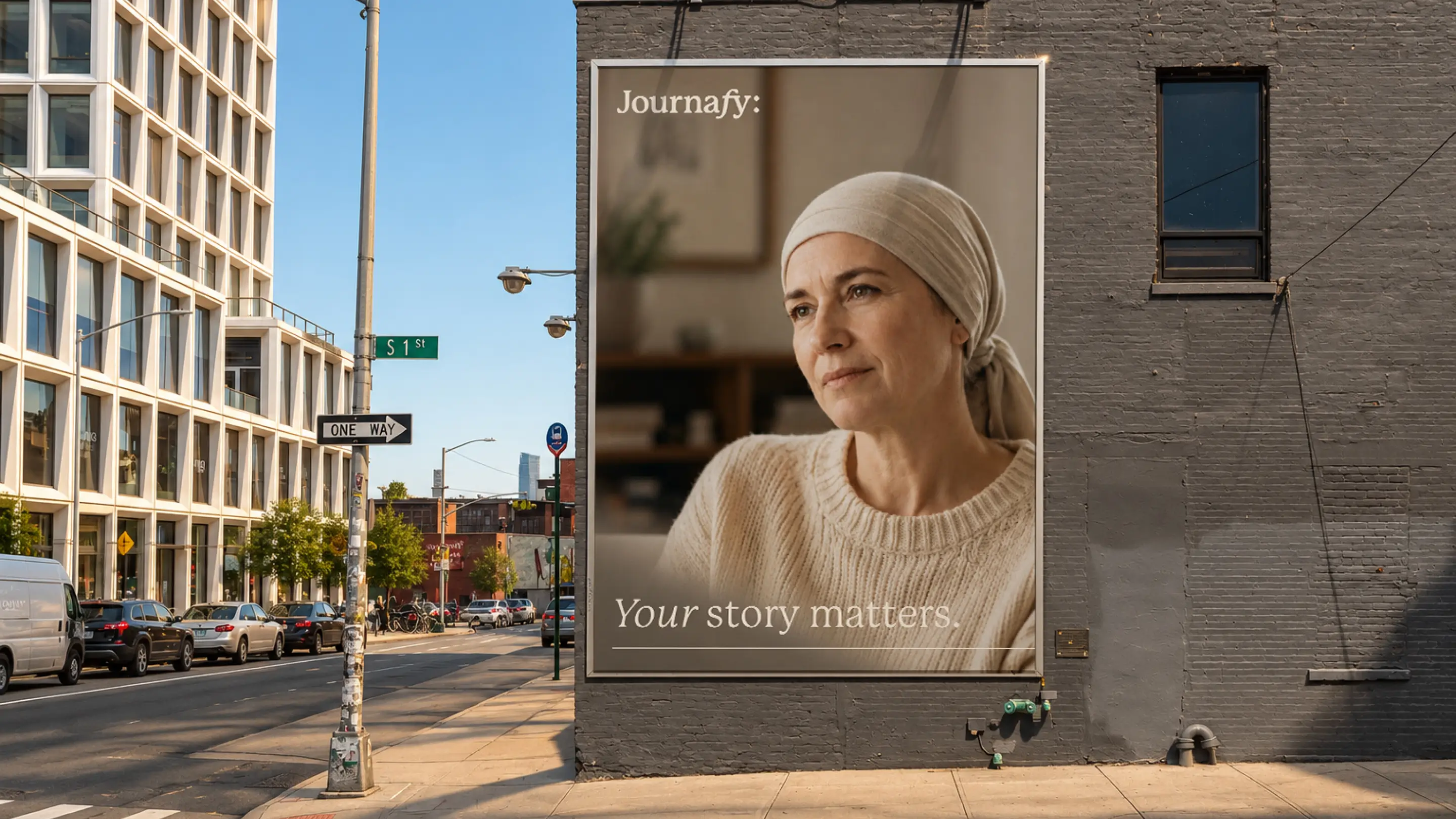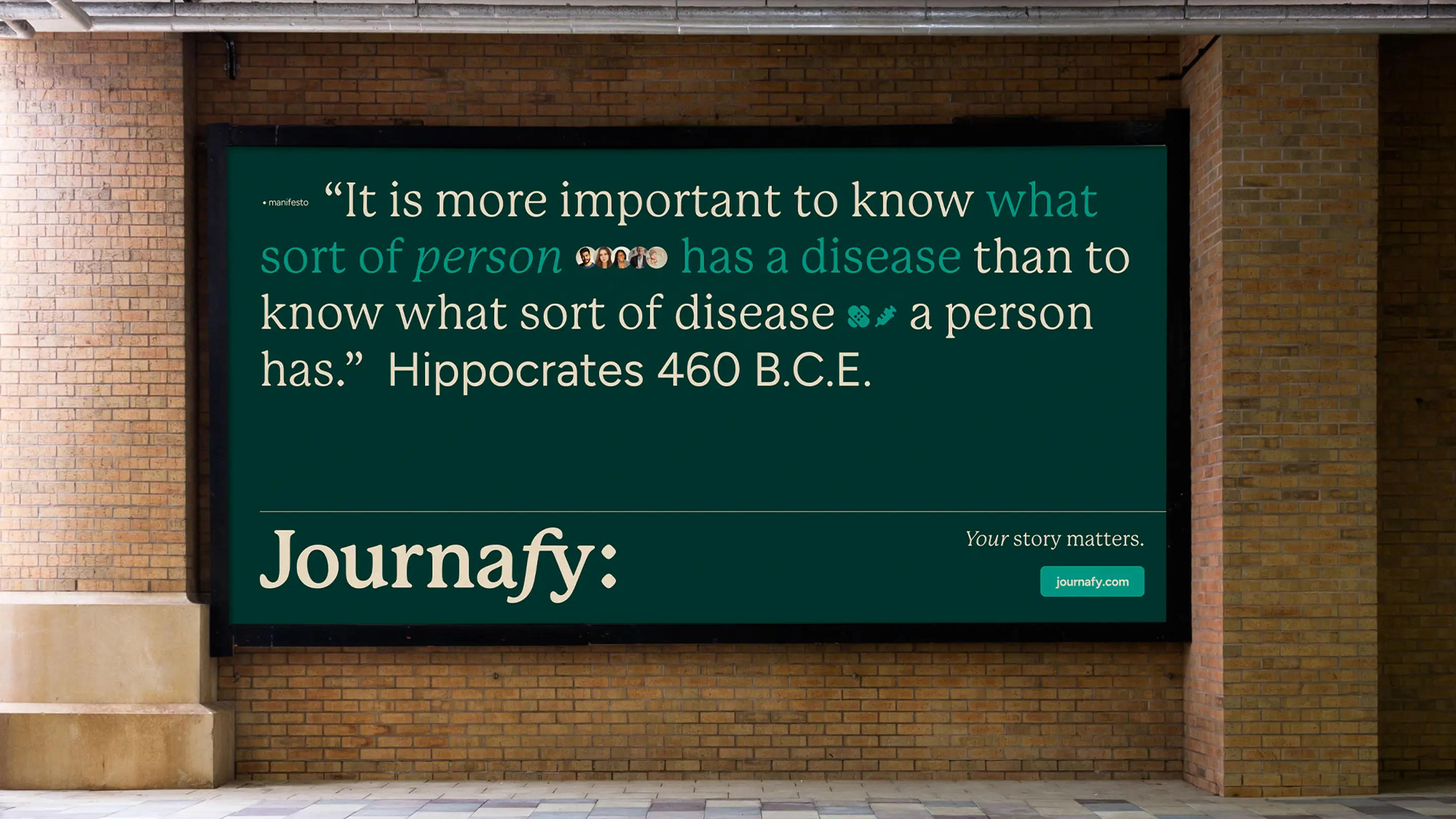

Your story matters.
Turning a clinical app into a human-centred healthcare brand. Post-ICU was built to help patients recover after intensive care through narrative medicine. But as the company expanded into oncology, neonatal care, assisted living and beyond, the name no longer reflected its ambition.

Conception
The challenge wasn’t simply to rebrand. It was to create a parent brand capable of bringing multiple healthcare products together under one vision — while moving away from the cold, clinical language that dominates the industry. The goal was to support the company’s expansion into the US with a brand that felt as human as the care it was designed to improve.
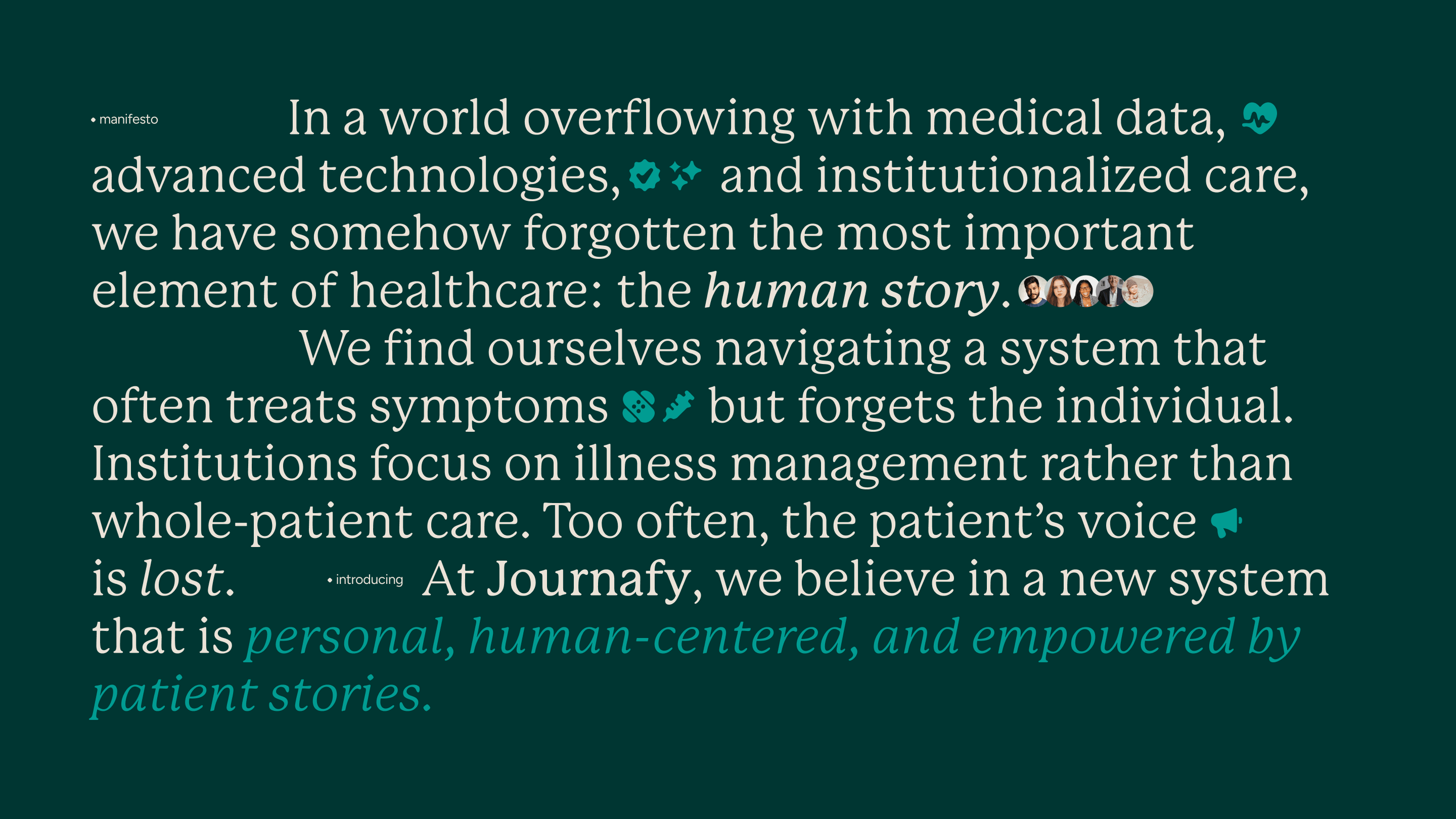
Healthcare is full of data, diagnoses and treatment plans. But somewhere along the way, the patient’s story often gets lost. That became the foundation of the new brand.
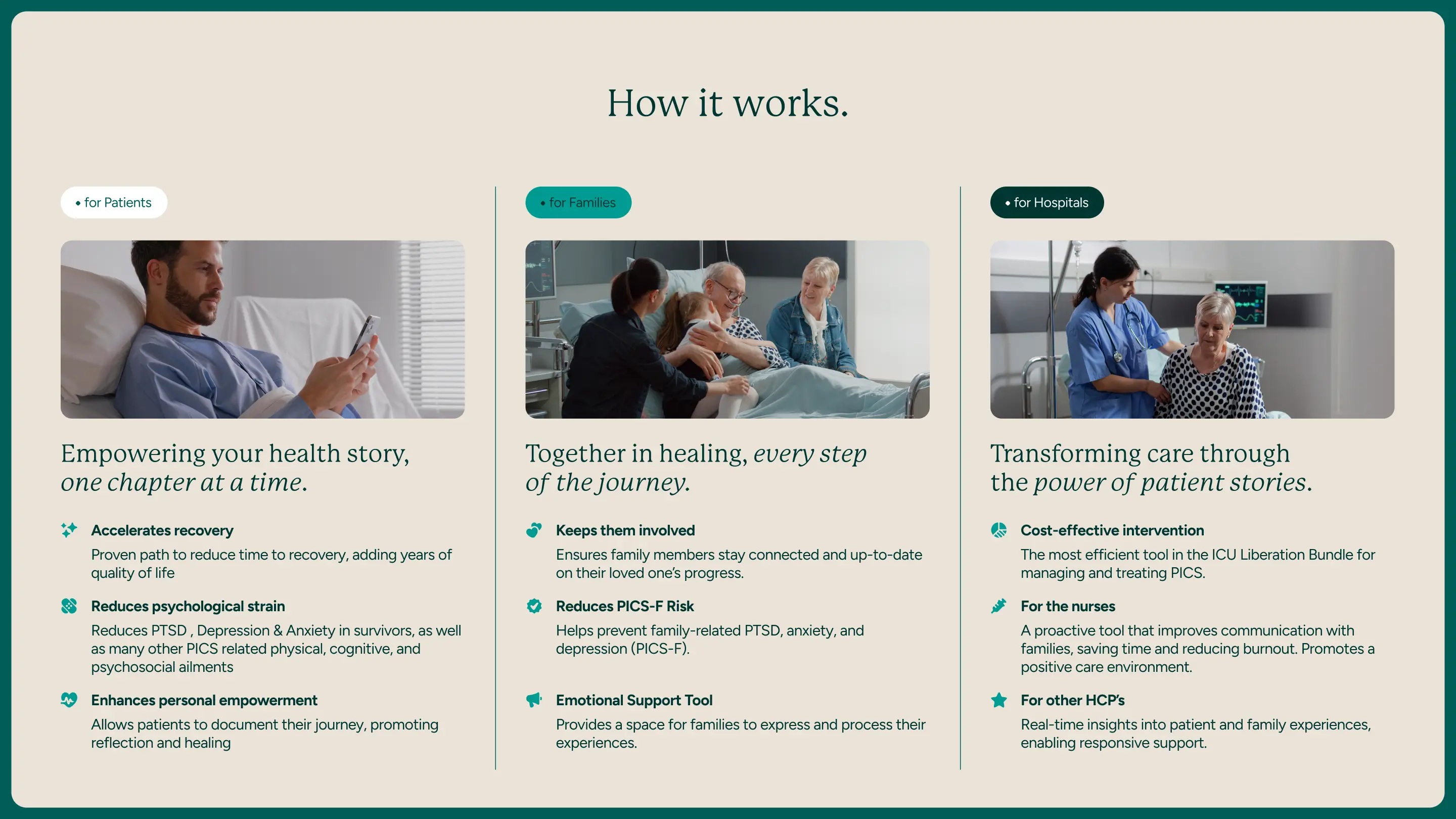
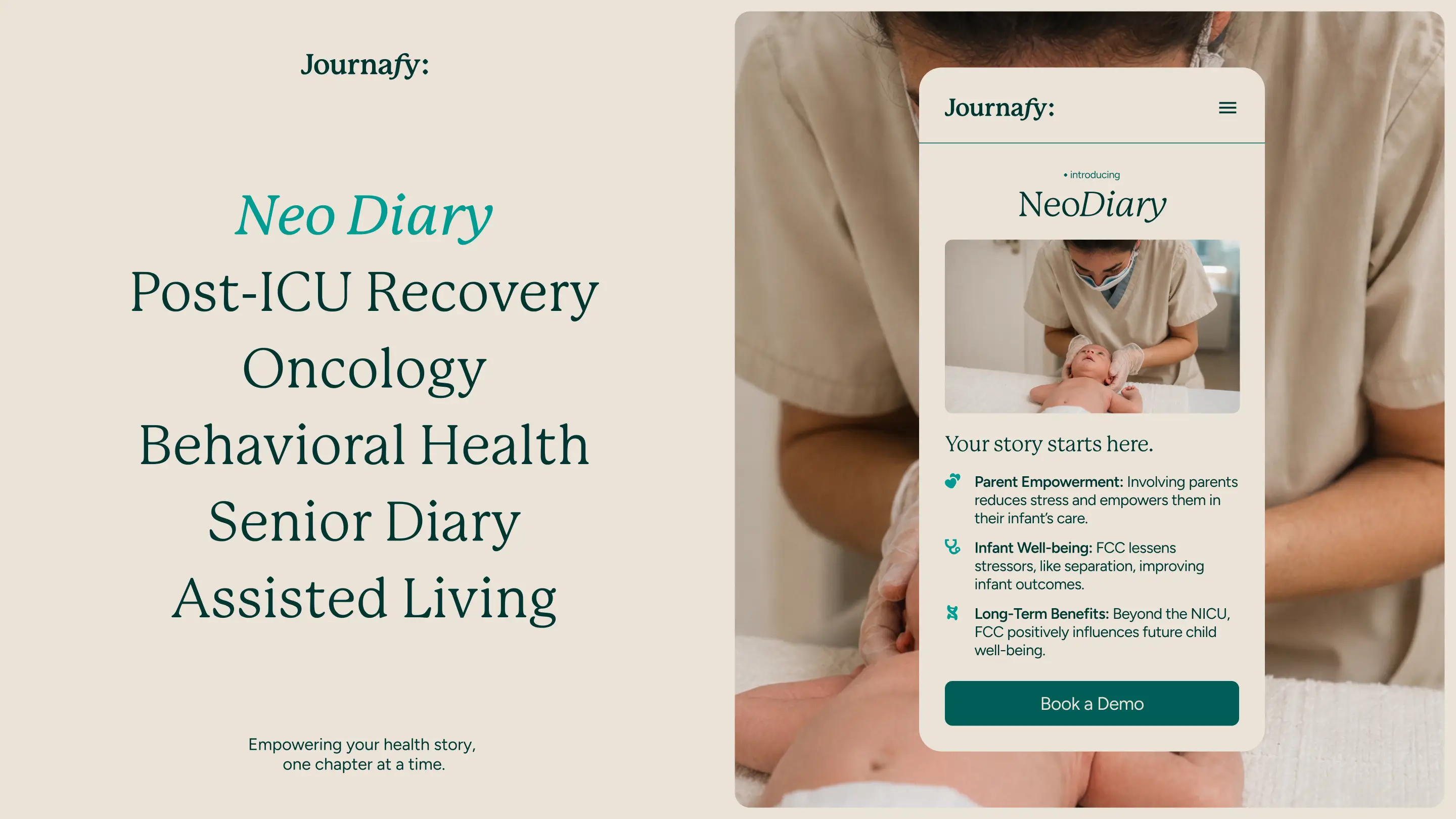
Rather than positioning the company around a single medical condition, we reframed it around the human journey. Every product became another chapter in someone’s life, from neonatal care through to assisted living, connected by one belief: healing doesn’t stop when you leave the hospital.

Designed around people, not patients.
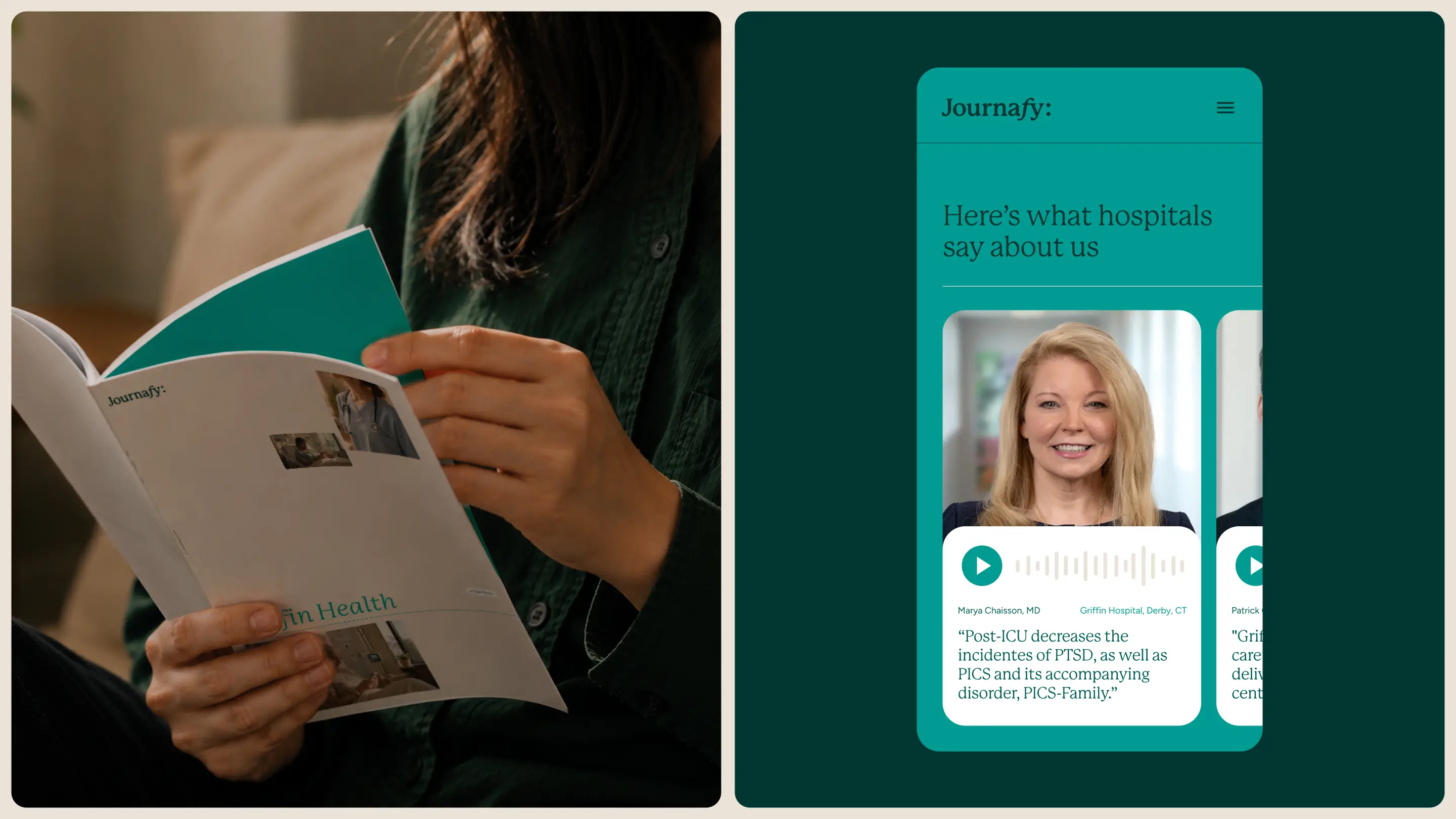
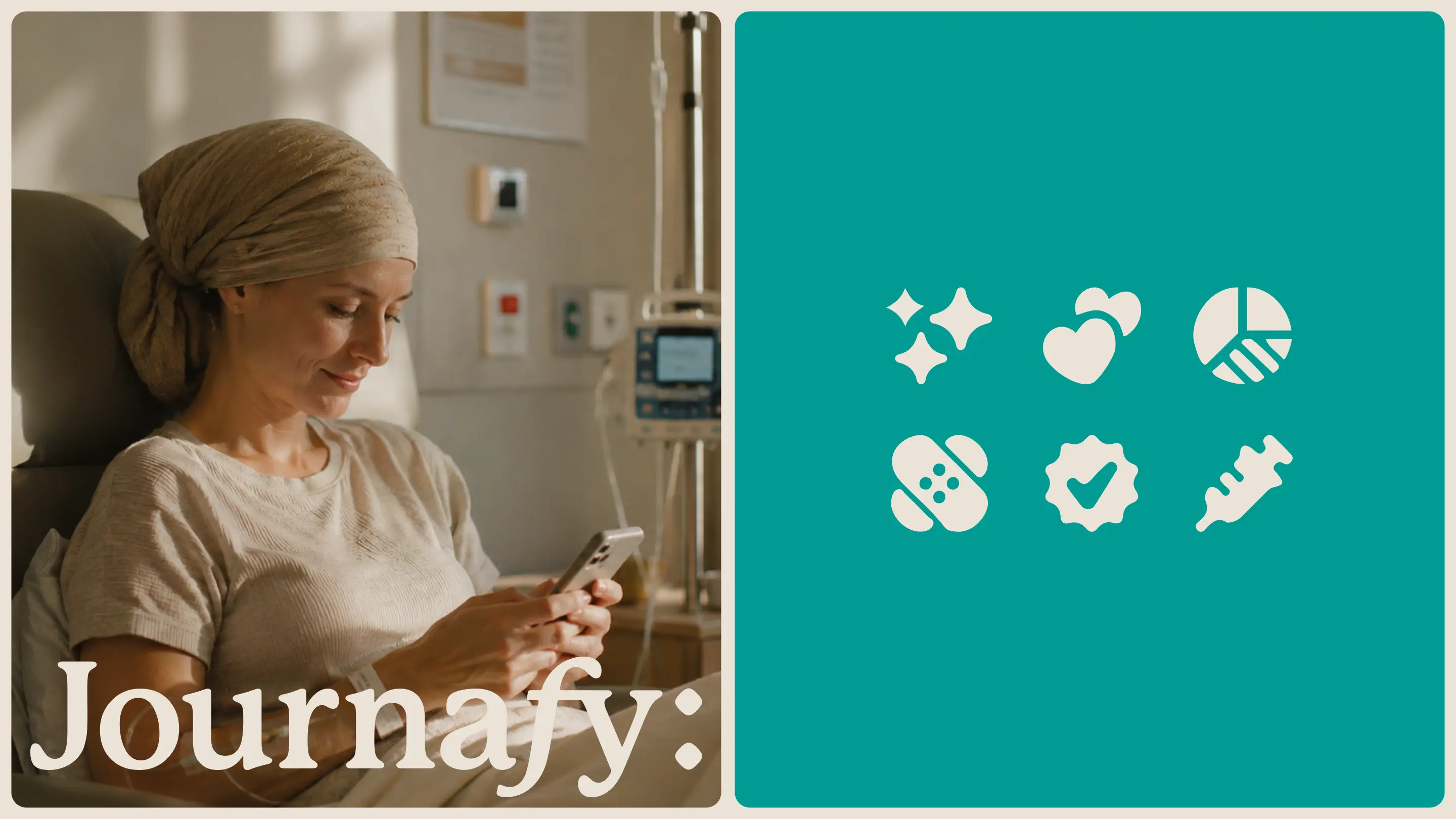
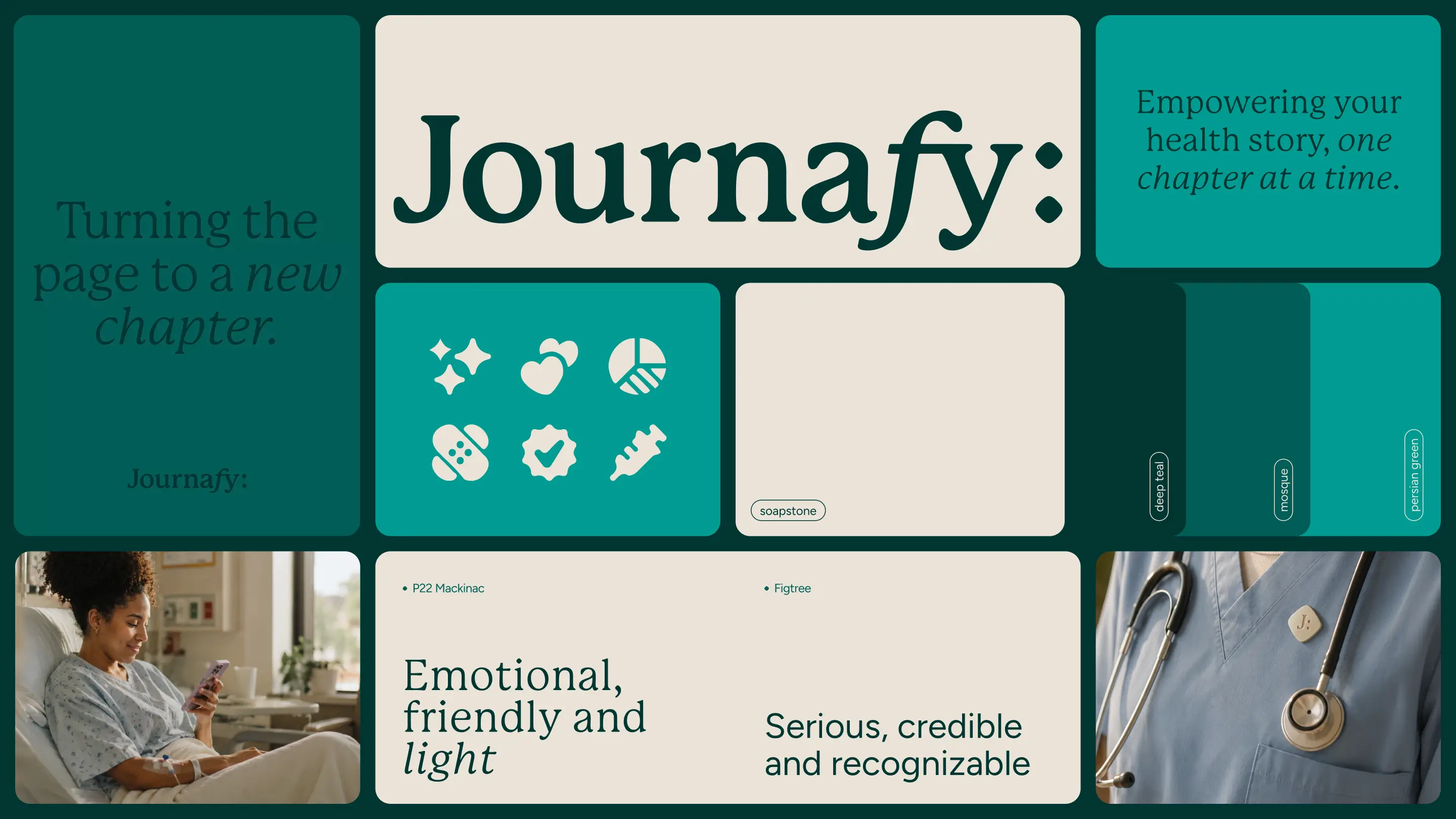
The new name, Journafy, brings together journal and journey, expressing the role storytelling plays throughout recovery. The custom logotype reinforces this idea, with the distinctive : acting as an invitation to the next chapter while creating an umbrella for every product in the ecosystem.
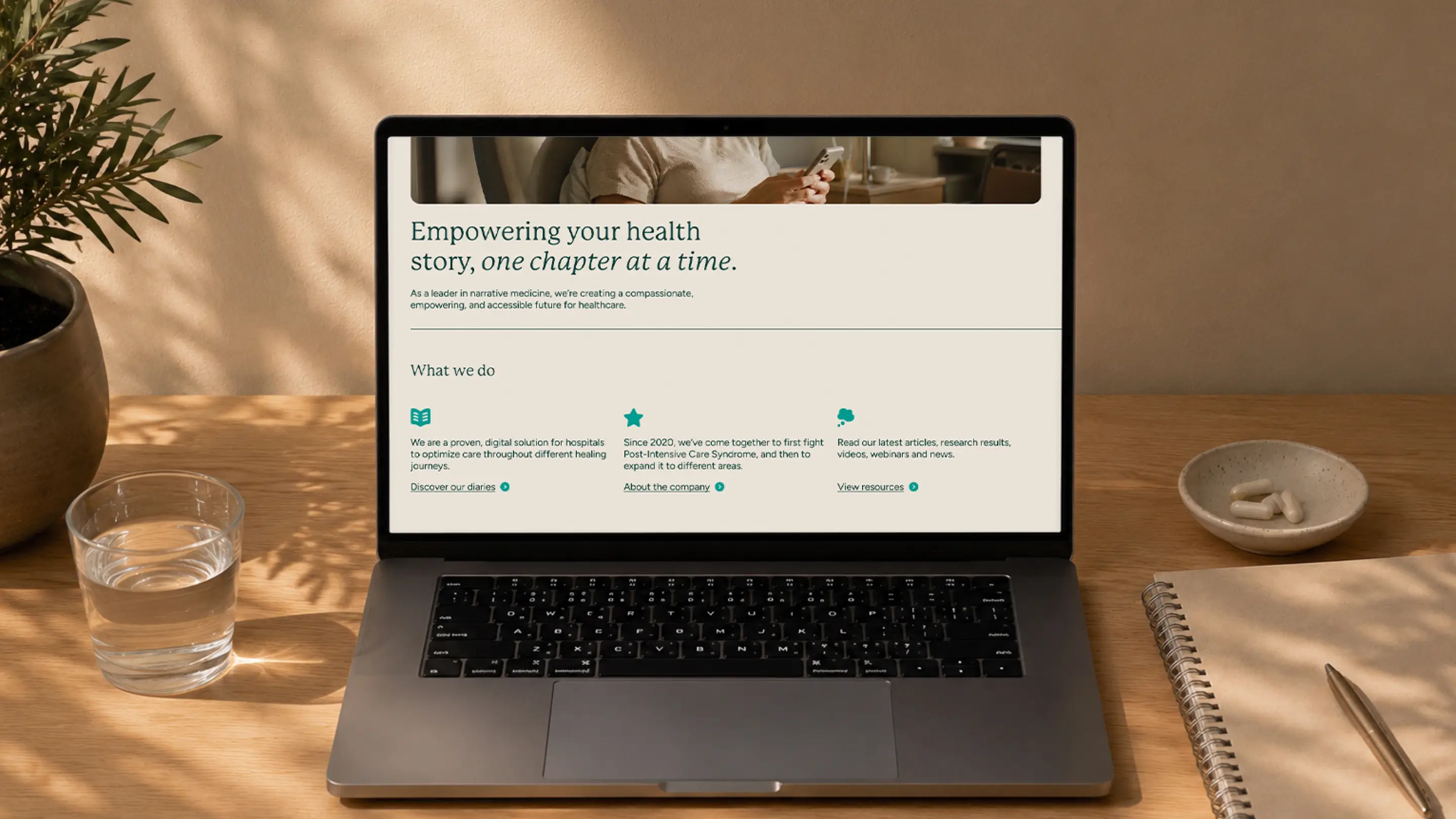
We developed the brand strategy, visual identity, website, product direction, iconography, motion system and tone of voice. Every decision aimed to make healthcare feel more personal without compromising credibility. A warm palette of greens and neutrals creates calm and reassurance. The pairing of P22 Mackinac with Figtree balances emotional warmth with clinical confidence. Throughout the identity, storytelling becomes a design principle rather than simply a message.
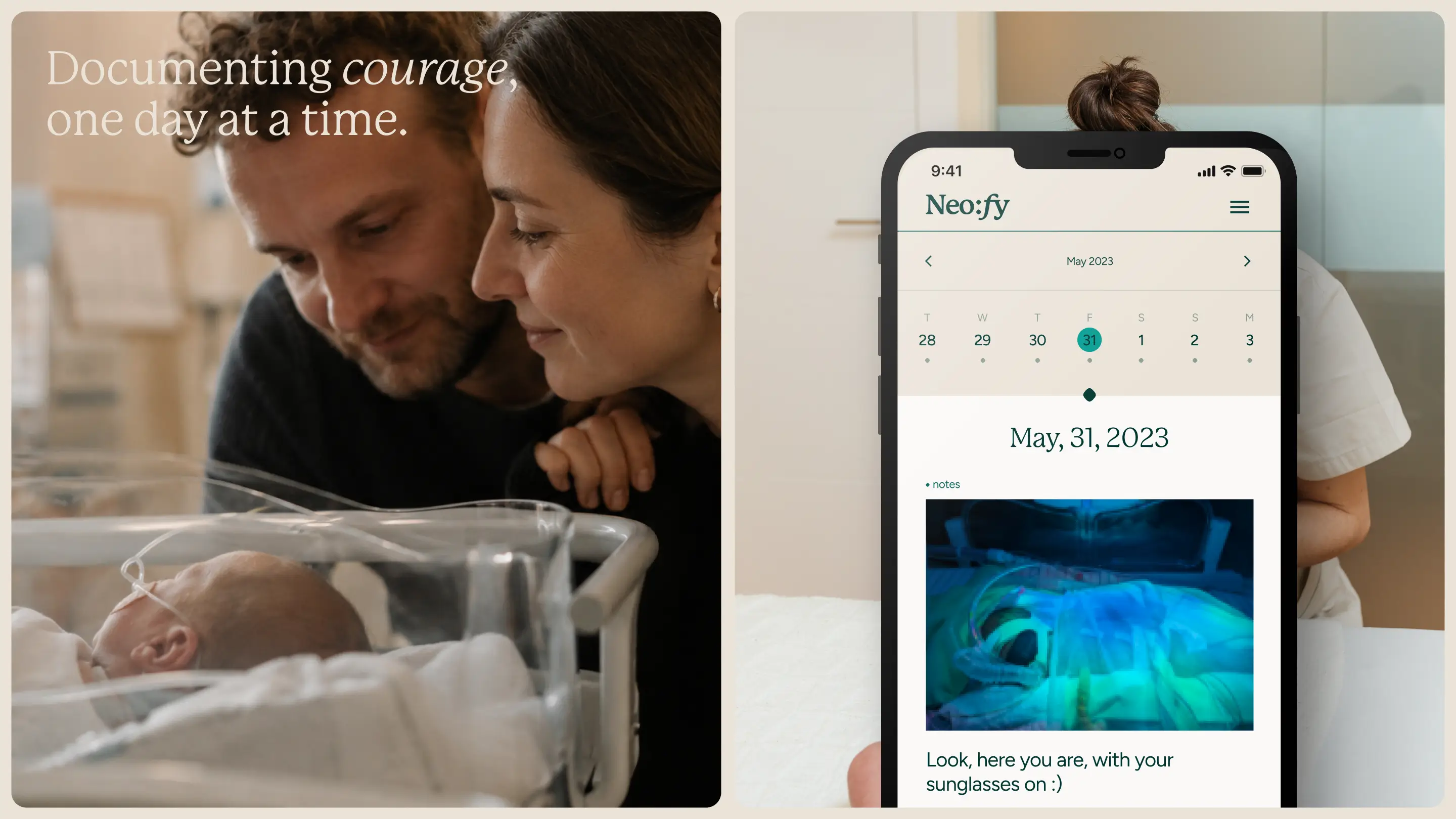
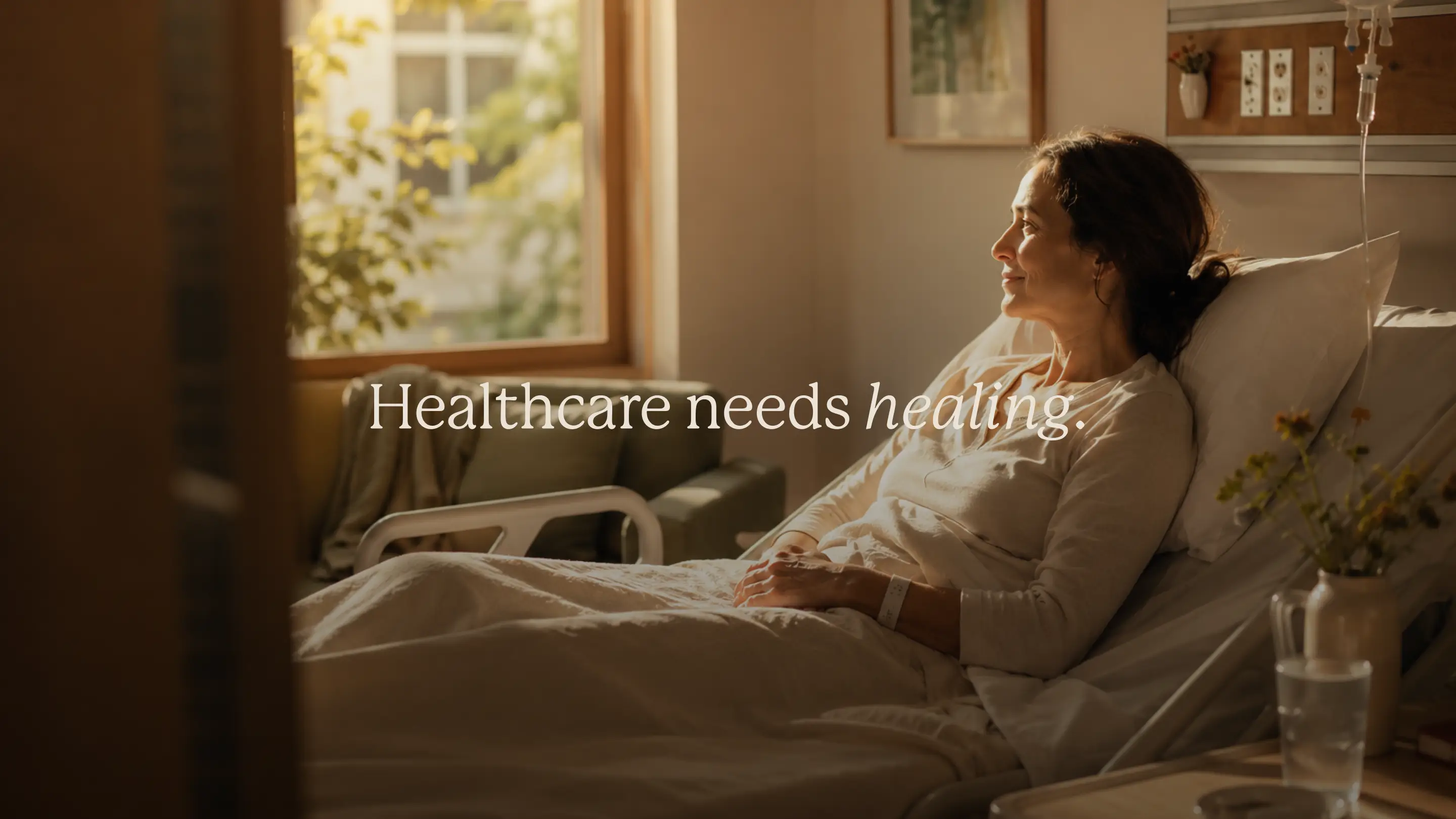
Instead of relying on polished healthcare photography, we developed an image direction centred on real moments. Warm light, imperfect compositions and intimate interactions replaced sterile environments and staged smiles. The result is photography that feels personal, diverse and deeply human — helping patients feel understood before they read a single word. The identity shifts the focus away from illness and towards the people living through it.